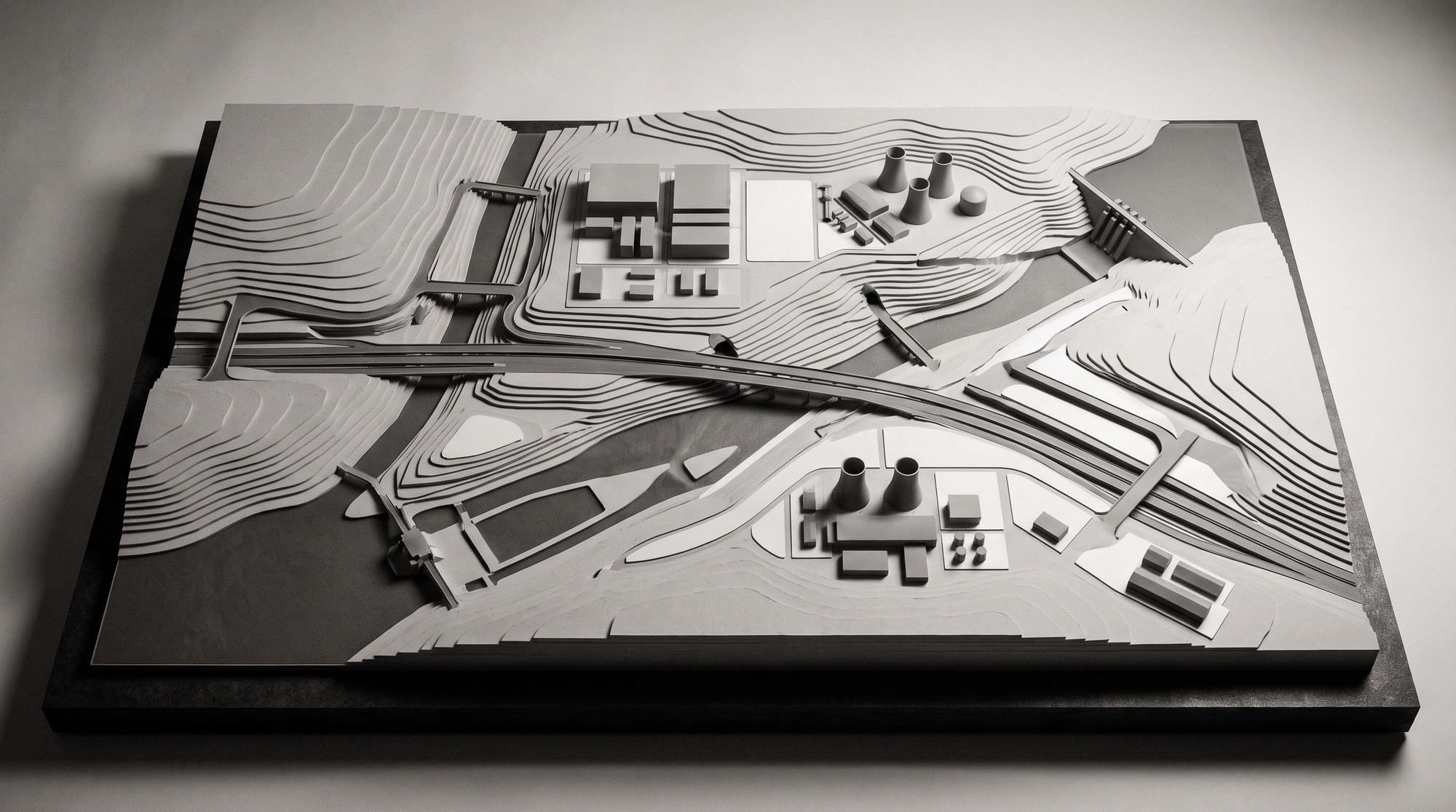
Full Overview
C3’s approach begins with human experience, judgment and responsibility.
Enhancing Human Capability
To enhance those capabilities, C3 has access to advanced proprietary AI resources of its sister company, JST. C3 integrates these resources into its human-led research, analytical and project-development processes to substantially increase the speed, breadth, depth and quality with which complex information and issues can be examined.
The result is an expanded human analytical capability. C3 can research and evaluate larger bodies of information, identify relationships across disciplines and issues, test assumptions and alternatives, and continually incorporate new information as a project develops, at a speed and scale that would be difficult to achieve through conventional human processes alone.
The purpose is not to replace human knowledge, experience or judgment, but to enhance them. Human participants establish the objectives, provide experience and contextual understanding, exercise professional and practical judgment, and retain governing authority over the resulting work. The advanced AI resources substantially expand the analytical capabilities available to those human participants.
C3 applies this combination of human experience and enhanced analytical capability through a proprietary, human-governed methodology designed to improve the quality, continuity and reliability of its research, analysis and project-development work.
C3 as Project Integrator
C3’s project-development approach is grounded in the multidisciplinary experience of its leadership, particularly its founder, Jeff Don. His professional experience across law, economics, international business, project development, commercial and financial matters, and cross-border governmental and institutional relationships provides the human foundation for approaching a complex project as an integrated whole rather than as a collection of separate professional assignments.
Complex projects require the coordinated development of many interdependent elements. Technical and engineering requirements, economics and finance, legal and regulatory matters, government and institutional relationships, markets and commercial arrangements, capital, strategic partners, contractors, implementation requirements and operating considerations may each involve different specialists and organizations, but decisions made in one area can materially affect many of the others.
C3 does not seek to replace the engineers, attorneys, financial institutions, technical specialists, contractors, operators, government authorities or other professionals whose specialized expertise a project requires. Rather, C3 works across these disciplines and participants, bringing their respective contributions into a coordinated project-development process and maintaining an integrated view of how the project is developing as a whole.
This allows technical, financial, commercial, legal, regulatory, governmental and implementation considerations to be evaluated not only within their individual disciplines, but also in relation to one another. As circumstances change, C3 can evaluate how developments in one part of the project may affect decisions, assumptions, requirements or opportunities elsewhere.
The objective is continuity across the entire project development lifecycle, from initial concept and feasibility through structuring, development, financing, implementation and ultimately operation, so that the many individual decisions required to develop a complex project remain connected to the objectives and requirements of the project as a whole.
An Integrated Development Methodology
Complex project development is rarely linear. New information emerges, assumptions change, regulatory or market conditions evolve, technical requirements develop, and decisions made in one area can create consequences elsewhere in the project.
C3 therefore uses an integrated development methodology that allows the project to be continuously evaluated as it evolves. Rather than treating research, analysis and project decisions as isolated steps, C3 maintains the relationships among them so that new information can be evaluated in the context of what has already been learned, decided, assumed or remains uncertain.
This process allows C3 to explore alternative development pathways, test developing assumptions and conclusions, identify gaps or inconsistencies, and reconsider earlier analysis when later information materially changes the project picture. The objective is not simply to accumulate information, but to progressively develop a more complete and reliable understanding of the project as a whole.
An important part of that methodology is maintaining discipline concerning what the available information actually establishes. C3 distinguishes established information from analysis and inference, evaluates the strength and relevance of supporting information, and preserves material uncertainty rather than allowing preliminary assumptions or developing conclusions to become accepted as established merely through repetition or continued use.
The methodology also preserves continuity. As a project progresses through different stages, participants, disciplines and decisions, the knowledge developed during earlier work can be carried forward together with its relevant context, qualifications and limitations. New information can then build upon, and where necessary challenge, that existing body of project knowledge.
The result is a project-development process that can learn and adapt as the project itself develops, while maintaining the analytical discipline and continuity necessary to support informed human judgment and decision-making.
The C3 Difference
C3 brings together experienced human judgment, multidisciplinary project integration and advanced analytical capabilities within a single development process.
The result is more than greater speed. It is the ability to see more of the project, understand more of the relationships within it, recognize consequences earlier, evaluate alternatives more effectively, and preserve continuity as the project moves from concept toward implementation.
Complex projects will always involve uncertainty, changing conditions, competing alternatives and decisions that cross traditional professional boundaries. C3’s approach is designed for that reality.
We integrate the people, disciplines, information and decisions that develop the project, while continually improving the human capacity to understand the project as a whole.
Start a conversation.
C3 International welcomes conversations with governments, project owners, investors, developers, technology companies and other organizations interested in developing significant infrastructure opportunities.